FirmGround

Stay on firm ground

Most projects are decided before they even start.

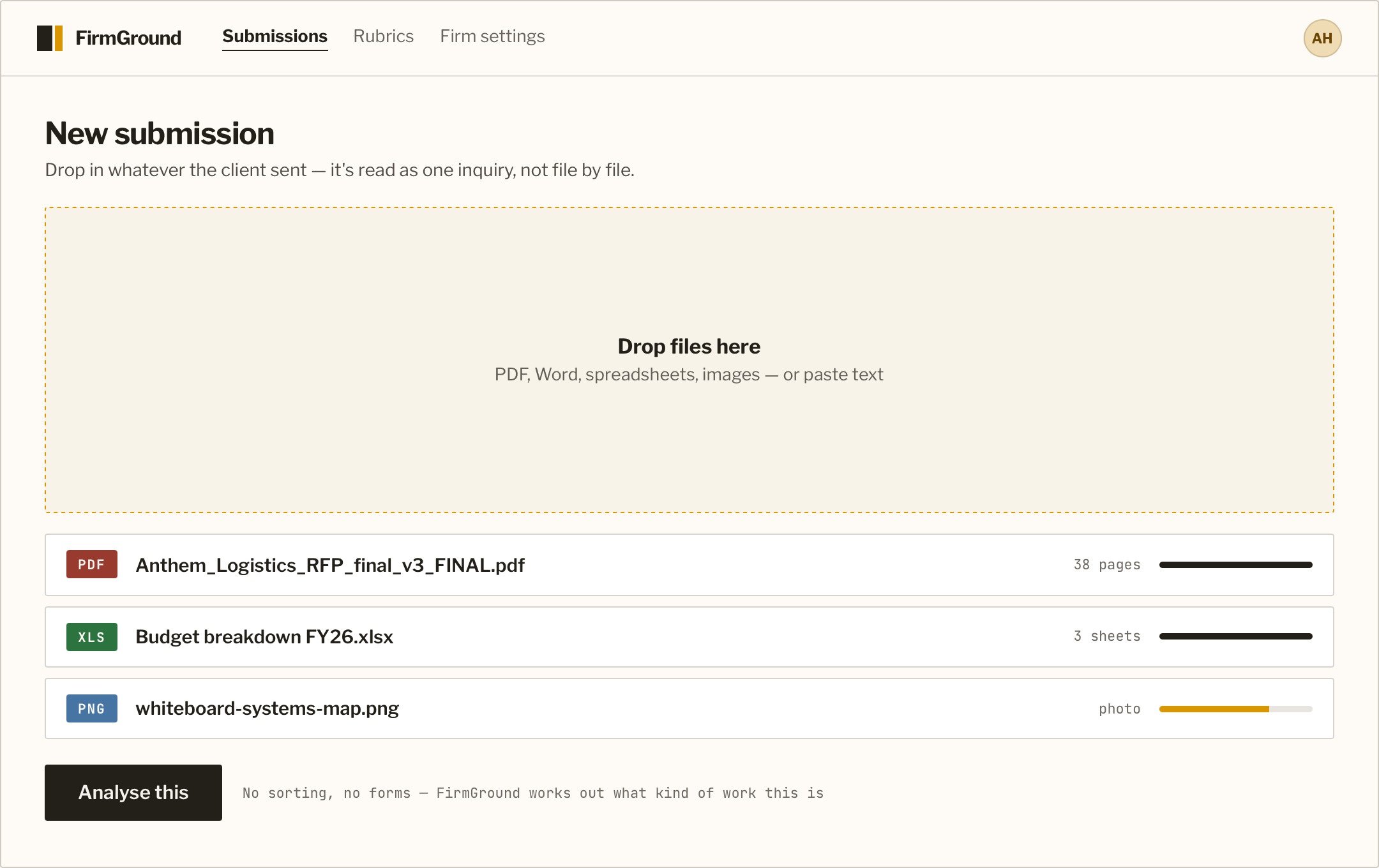
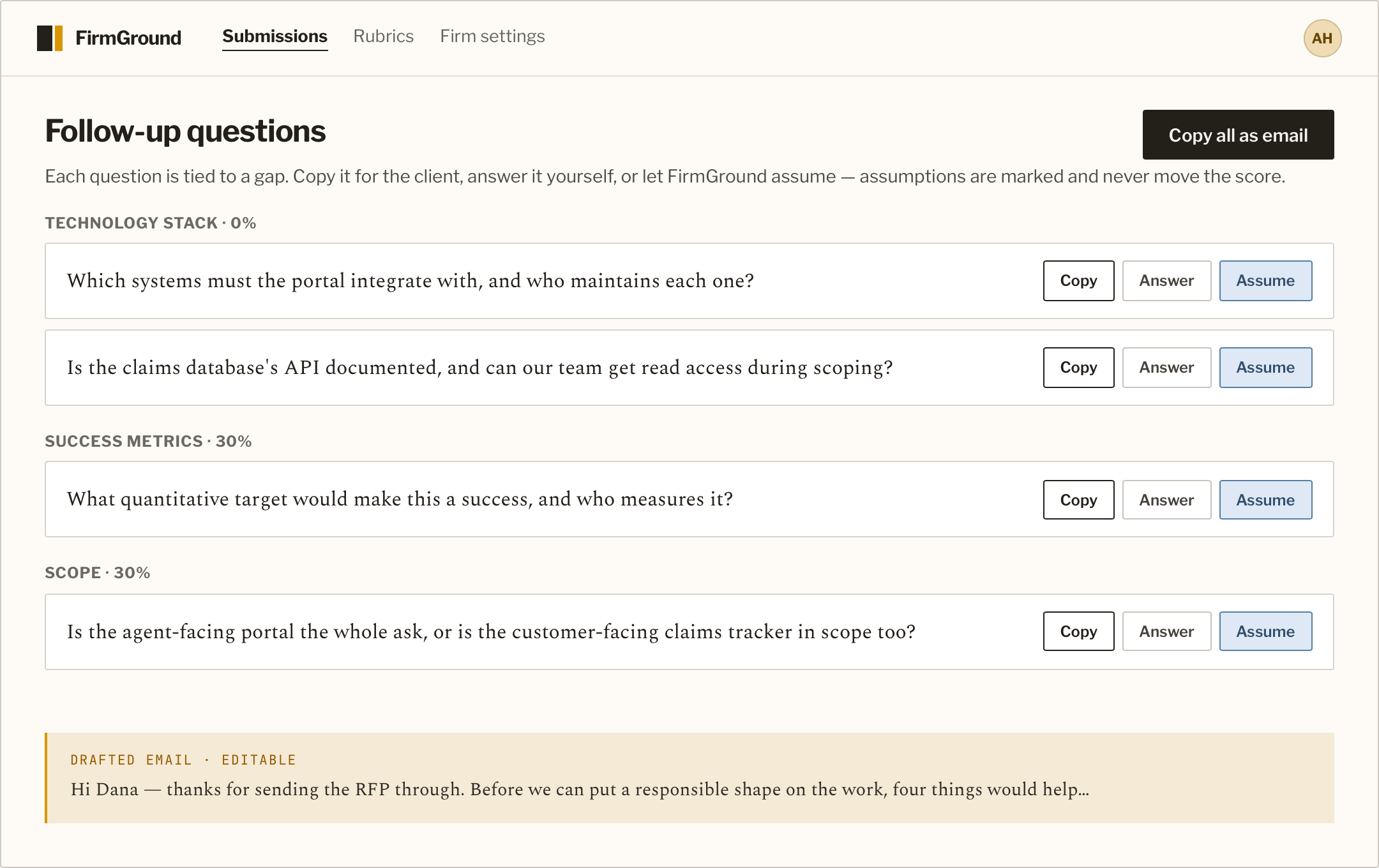
The gaps that sink them are already visible in the first inquiry. FirmGround reads what the client sent, shows what's missing, and turns the gaps into questions in about a minute, before anyone commits to a number.

Faster answers. Firmer quotes. Comparable briefs.

Try Free then $149 a month for the whole firm
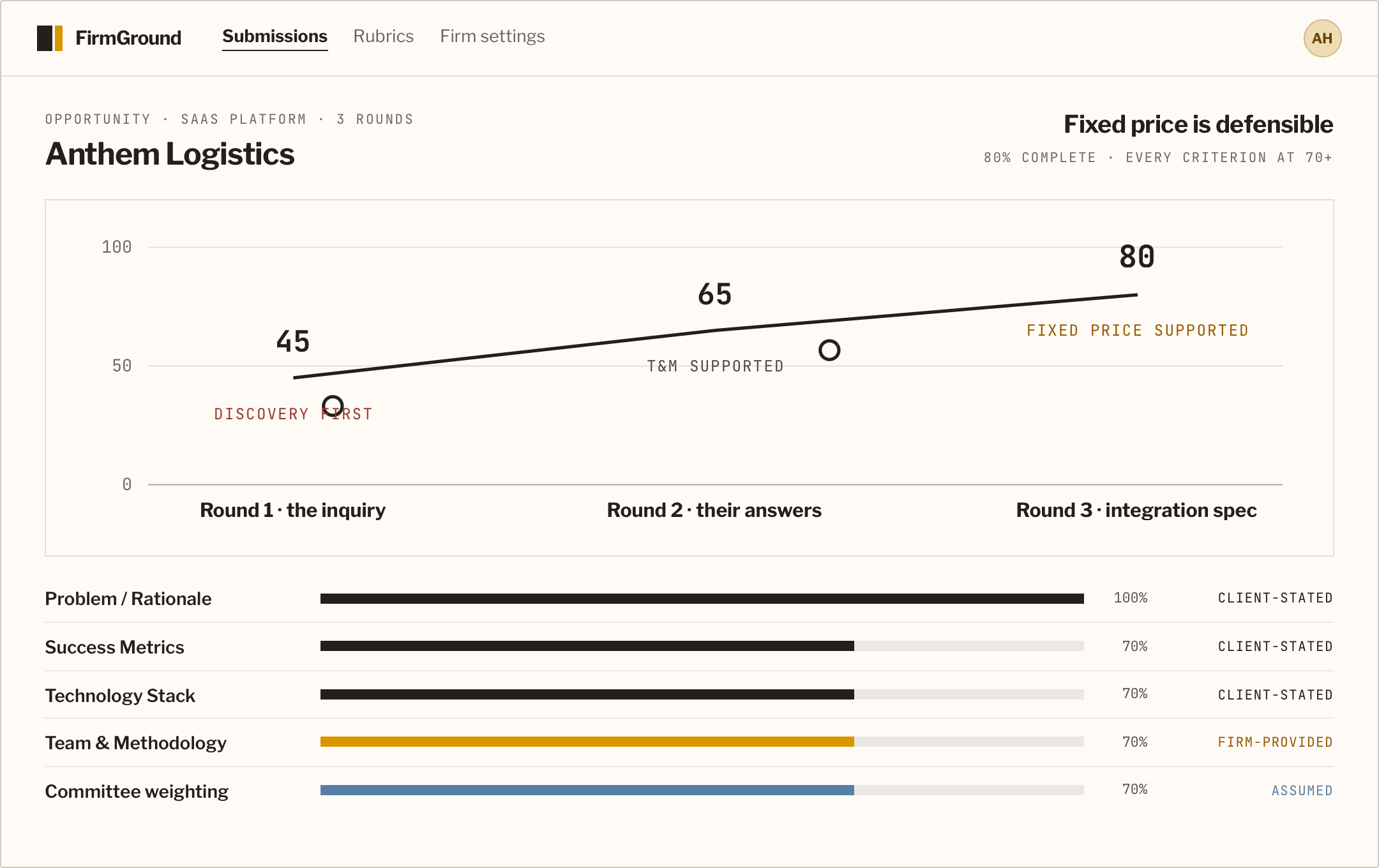
FirmGround scorecard — score, verdict, and criteria
What the client sent → where you stand

Tell me if this sounds familiar

An inquiry comes in. Sales answers what they can. Delivery gets pulled in and comes back with questions rather than answers. The client takes a week and answers half. Another round. Another week. Time is about to run out, and you quote a project nobody in the building fully understands.

Been there. Done that. Bought the t-shirt.

I spent the better part of a decade leading a hundred-person technology services firm. My team and I answered thousands of inquiries. Not one arrived ready to estimate. Incomplete client material was one (giant) problem. The other: every inquiry needed input from product, design, engineering, and sales. Coordination was a nightmare. Proposals went out rushed, or not at all.

This is what I mean when I say most projects are decided before they even start. Rush the due diligence and you invite mistakes and misalignment. Questions don't get asked. Clarifications don't get… clarified. And what's a founder to do? Time is money, and a pre-sales team on staff costs a fortune.

There must be a better way, right?

There is: FirmGround.

FirmGround reads every inquiry the way your whole team would, if they were ever in the room at the same time. What sales, delivery, design and product each know to ask, written down once, applied in a minute.

If your firm has grown past the point where you personally catch every inquiry, FirmGround is for you.

Andreas, founder of FirmGround
/Andreas
Founder, FirmGround

Three Steps to Firm Ground

1

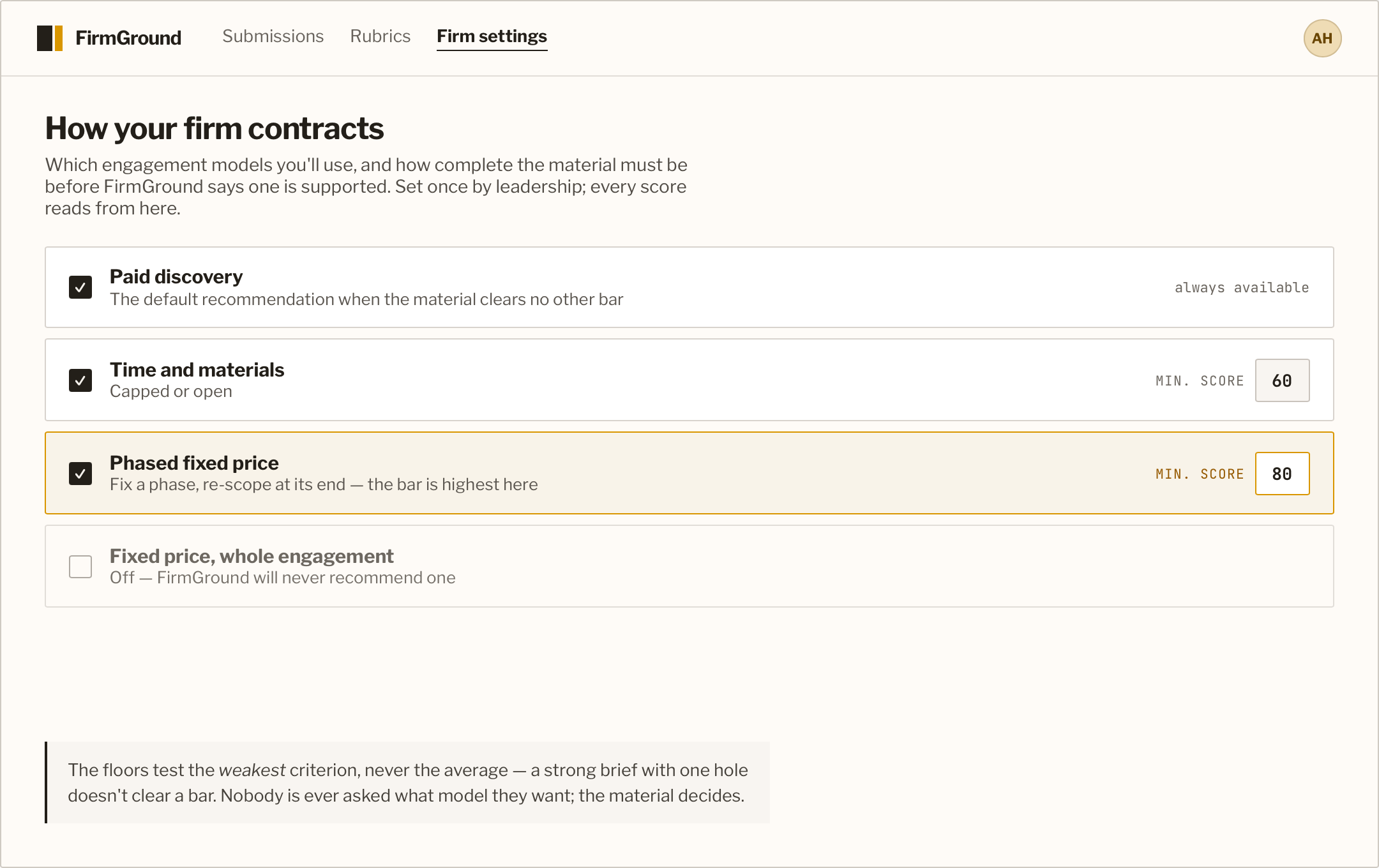
Set the bar for how you sell.

Tick the engagement models your firm actually uses and set the floor for each. The floors test the weakest criterion, never the average, so a strong brief with one hole doesn't clear the bar.

Firm settings — score bands for discovery / T&M / fixed price
2

Define what a complete brief must contain.

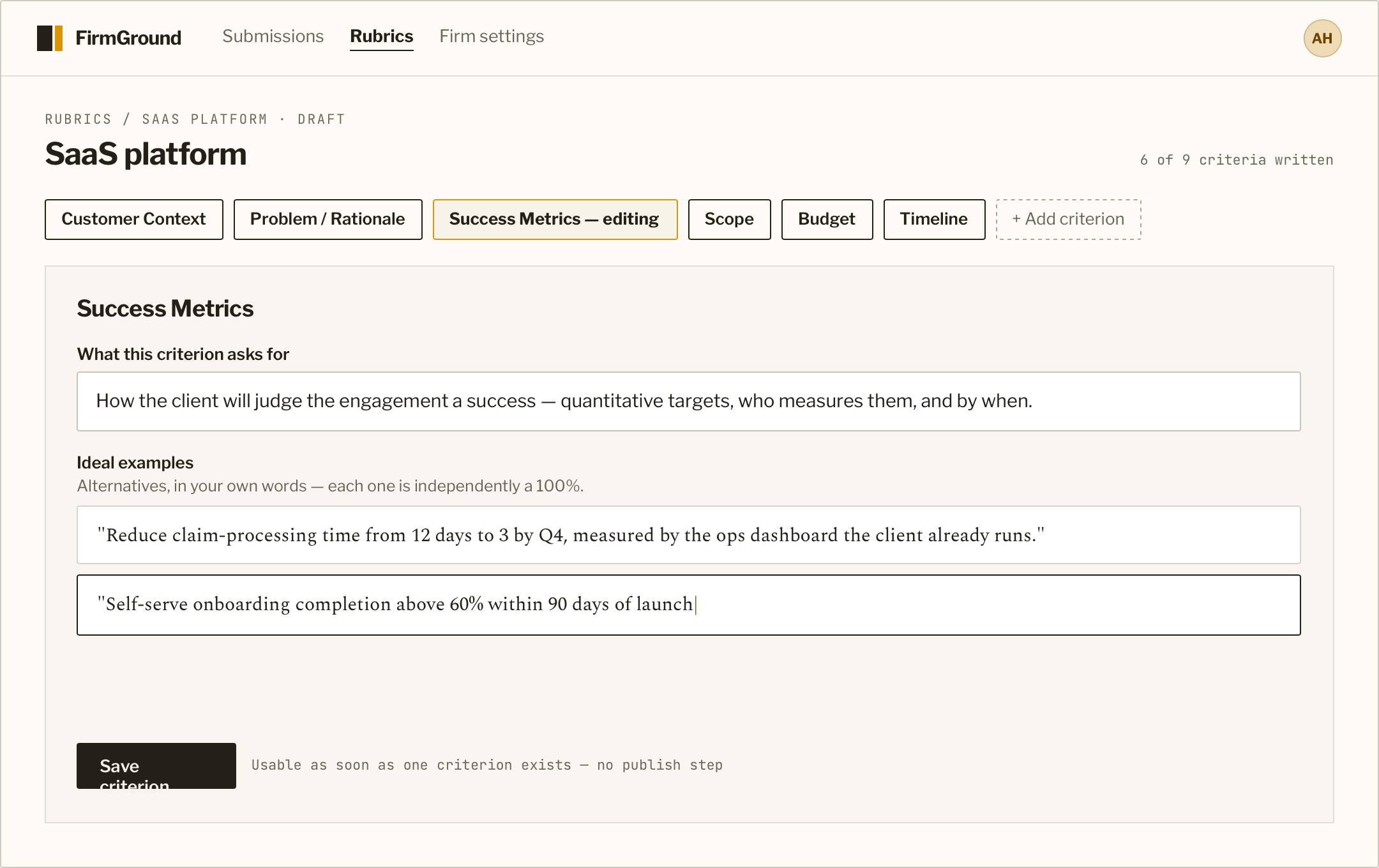
Start from the built-in rubric and edit it into yours. Each criterion is a plain description of what you need to know, plus ideal answers in your own words. That's what every inquiry gets measured against.

Criterion editor — description and ideal answer
3

Make it available to everyone.

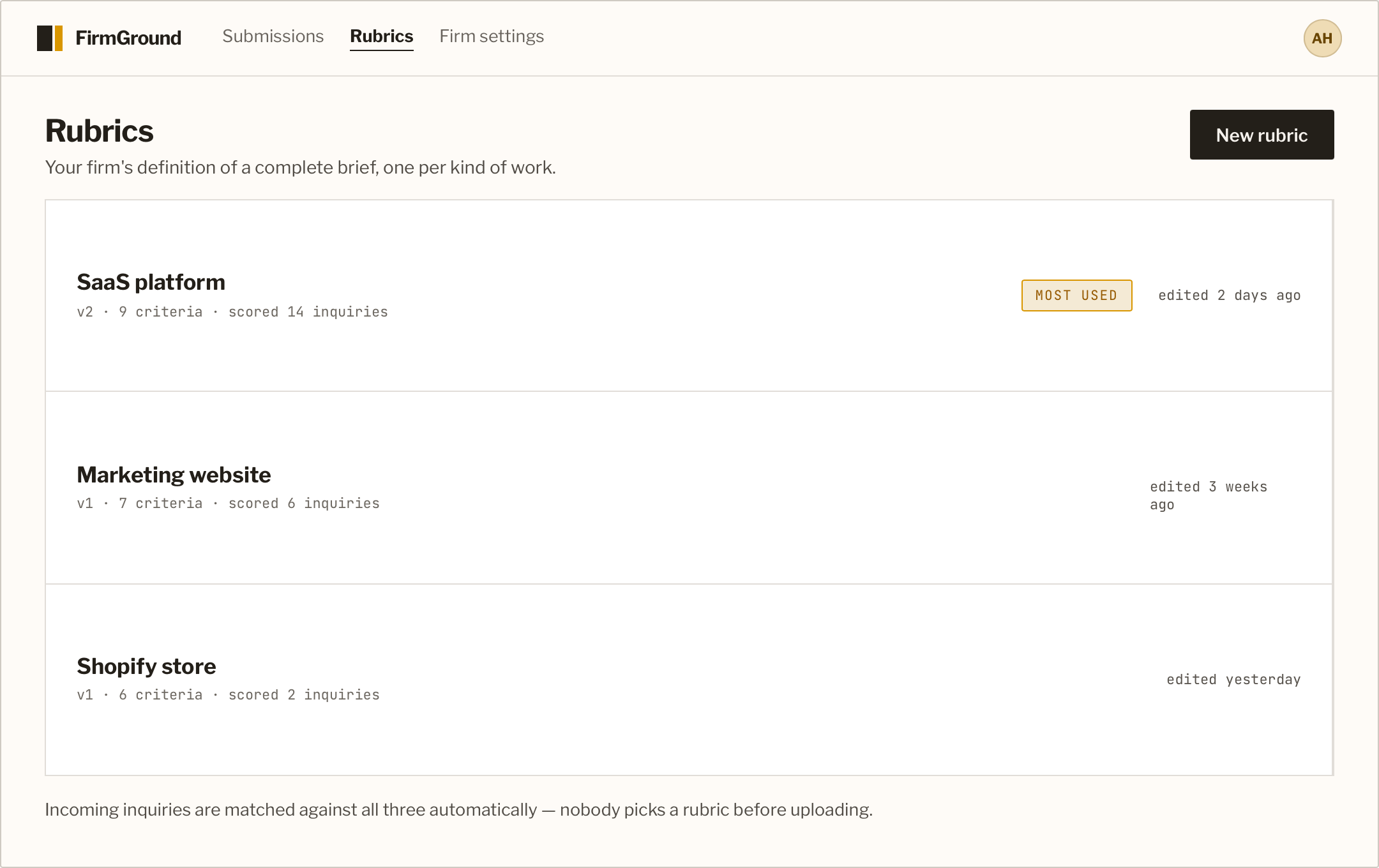
One rubric per line of business. Every inquiry is read against all of them, so nobody picks a rubric before uploading, and nobody applies the standard differently.

Rubric list — the firm's standard, visible to the team

Pricing

Free
$0

One user, three open opportunities at a time.